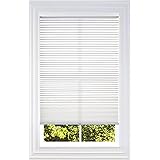
BlindsAvenue Cordless Cellular Shade, White, 30″ W x 48″ H | Light Filtering Pull Down Blinds for Indoor Windows, Thermal Insulation, Noise Reduction Honeycomb Shades for Home Privacy
$45.62 (as of August 30, 2026 00:00 GMT +00:00 – More infoProduct prices and availability are accurate as of the date/time indicated and are subject to change. Any price and availability information displayed on [relevant Amazon Site(s), as applicable] at the time of purchase will apply to the purchase of this product.)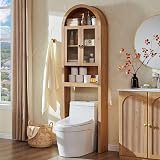
IFGET Arched Over The Toilet Storage Cabinet with Acrylic Doors,Natural Oak | Modern Over Toilet Bathroom Organizer Shelf, Small Wooden Bathroom Storage Cabinet with Open & Adjustable Shelf, Space Saver
(as of August 30, 2026 00:00 GMT +00:00 – More infoProduct prices and availability are accurate as of the date/time indicated and are subject to change. Any price and availability information displayed on [relevant Amazon Site(s), as applicable] at the time of purchase will apply to the purchase of this product.)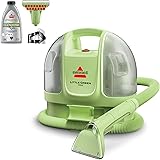
BISSELL Little Green Mini Portable Carpet Cleaner, 4075 | HydroRinse self-cleaning tool; 4-in. tough stain tool; upholstery & car detailing; Tea Green color
$75.80 (as of August 30, 2026 00:00 GMT +00:00 – More infoProduct prices and availability are accurate as of the date/time indicated and are subject to change. Any price and availability information displayed on [relevant Amazon Site(s), as applicable] at the time of purchase will apply to the purchase of this product.)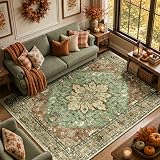
RELEANY Washable Area Rug, 8’x10′, Brick/Brown/Green | Non-Slip, Water Repellent, Pet Friendly, Easy to Clean, Vintage Floral Boho Decor for Living Room Bedroom Dining Room
$79.99 (as of August 30, 2026 00:00 GMT +00:00 – More infoProduct prices and availability are accurate as of the date/time indicated and are subject to change. Any price and availability information displayed on [relevant Amazon Site(s), as applicable] at the time of purchase will apply to the purchase of this product.)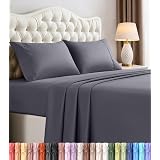
Queen Sheets Set, 4 Pieces 16″ Deep Pocket Hotel Luxury Bed Sheets, Grey | Extra Soft Bedsheet Set, Comfy & Breathable Cooling Sheets, Wrinkle & Fade Resistant, Fitted Sheet, Flat Sheet, 2 Pillowcases
$12.99 (as of August 30, 2026 00:00 GMT +00:00 – More infoProduct prices and availability are accurate as of the date/time indicated and are subject to change. Any price and availability information displayed on [relevant Amazon Site(s), as applicable] at the time of purchase will apply to the purchase of this product.)Most smart vacation homes achieve seamless luxury and protection by blending discreet cameras, perimeter sensors, smart locks, environmental monitors, and integrated automation that you control remotely; biometric access, encrypted networks, and professional monitoring preserve privacy while ambient lighting, guest access schedules, and concierge integrations maintain a high-end experience, and scalable systems let you tailor alerts, energy use, and remote maintenance to protect your property without compromising comfort.

Key Takeaways:
- Integrated smart access: keyless entry, temporary digital keys, biometric options and PMS integration for seamless guest arrivals and controlled remote access.
- Professional-grade video with AI and encrypted cloud storage: high-resolution, privacy-masked cameras, smart motion filtering and instant mobile alerts for fewer false alarms.
- Automated ambiance and deterrence: schedule-driven lighting, smart shades and audio scenes that enhance luxury while simulating occupancy to deter intruders.
- Environmental safety automation: smoke/CO detectors, water-leak sensors, automatic shutoff valves and emergency workflows to protect property and guests.
- Hardened networking and resilience: separate guest Wi‑Fi, WPA3/VPN, automated firmware updates, UPS/cellular failover and optional professional monitoring/concierge support.

Understanding Smart Vacation Homes
Definition and Features
You’ll find smart vacation homes combine connected hardware and centralized software: smart locks with temporary PINs, remote cameras with person-detection, smart thermostats, occupancy and leak sensors, automated lighting and blinds, and energy meters. Systems commonly use Zigbee or Z-Wave (AES‑128) for sensors and Wi‑Fi with WPA2/WPA3 for cameras, plus a local hub for offline failover. You can also deploy OTA updates, role-based access, and reservation-triggered automation to streamline operations.
Benefits of Smart Technology
You gain measurable security, operational efficiency, and guest satisfaction: temporary codes and access logs cut key-related incidents, smart thermostats typically save about 10-15% on HVAC energy, and leak or smoke sensors reduce maintenance response time. You’ll also see fewer false alarms when cameras use analytics, faster turnovers via remote diagnostics, and clearer audit trails that simplify insurance and incident resolution.
You can operationalize those benefits by linking property-management platforms to devices: trigger a “cleaning” scene at checkout, enable geofenced climate control to save energy between stays, and push firmware updates centrally. Integrations with RemoteLock, cloud thermostat APIs, and occupancy-driven schedules let you scale from a single luxury villa to multiple listings while lowering onsite calls and improving uptime.
Assessing Security Needs for Vacation Homes
Start by mapping your property’s specifics: size, layout, value of contents, seasonal vacancy and local response times. If you host more than eight bookings a month you’ll prioritize keyless entry, remote check-in and frequent sensor resets; when the home sits vacant over 200 days a year schedule periodic inspections, lighting automation and off-site monitoring. Also factor contractor access, guest turnover and weather exposure to choose cameras, water sensors and backup power that match risk and budget.
Common Security Risks
You face burglary, package theft and unauthorized parties most often, while vandalism and squatters rise when properties remain empty. Water damage from unattended leaks and HVAC failures can produce five-figure repair bills, so water sensors and automatic shutoffs matter. Also account for insider risks-workers or cleaners with lax background checks-and neighborhood threats like coastal storm surge or wildfire-prone brush that require specific protective measures.
Tailoring Security Solutions
Start by matching solutions to risks: if your home sees high guest turnover, deploy AES-encrypted smart locks, video doorbells and automated check-in to reduce key handoffs; for remote properties add 24/7 professional monitoring and cellular backup. Smaller rentals often get strong ROI from motion-activated lighting plus window/door sensors (equipment often under $100 per sensor), while luxury estates benefit from multi-layered systems, onsite guard services and integrated automation tied to security scenes.
Define thresholds and pilot before scaling: set noise triggers around 85-95 dB to detect parties without constant false alarms, use geofencing to arm/disarm when you or cleaners arrive, and enforce role-based camera access so vendors see only necessary footage. For measurable results, run a 90-day pilot (smart lock + doorbell + two sensors), log incidents and guest feedback, then expand to monitoring or perimeter analytics if incidents exceed one per quarter.
Luxury Security Options for Smart Vacation Homes
Combining professional-grade cameras, layered sensors, and concierge-style access control lets you protect high-value rentals without compromising design. Install discreet 4K cameras, glass-break detectors, and vibration sensors alongside silent panic alerts; integrate those feeds with property-management platforms for centralized alerts and automated incident responses. Many hosts keep 30+ days of encrypted cloud footage and tie alerts to on-call security or local law enforcement contacts to shorten reaction times and preserve guest confidence.
Advanced Surveillance Systems
Deploy a mix of 4K fixed and PTZ cameras with 180° lenses, 30 m IR night vision, and edge-AI person detection so you get accurate alerts and minimal false positives. Use thermal sensors for perimeter detection in low-visibility conditions and encrypted RTSP/HTTPS streams for privacy. For example, pairing local edge processing with cloud retention (30-90 days) cuts bandwidth needs while keeping forensic-quality footage for insurance or dispute resolution.
- 4K PTZ and wide-angle fixed cameras
- Thermal and PIR perimeter sensors
- Edge-AI person/vehicle detection
- 24/7 monitoring with verified dispatch options
Surveillance Features and Benefits
| Feature | Benefit |
| 4K resolution | Clear identification for claims or prosecution |
| Edge-AI | Fewer false alerts, reduced cloud costs |
| Thermal sensors | Detect intrusions in darkness or foliage |
| Encrypted cloud storage | Secure, auditable footage for 30-90 days |
Smart Lock and Access Control
Choose locks that support AES-256 encryption and multiple radios (Wi‑Fi, Bluetooth, Z‑Wave) so you can manage access remotely and issue one-time or date-bound codes tied to bookings. You’ll automate guest check-ins via PMS integrations (Airbnb, Guesty), revoke codes post-stay, and enforce auto-lock timers; many operators set auto-lock after 30 seconds to prevent accidental propping and reduce liability.
Digging deeper, audit logs and access reports give you a timestamped trail-useful for dispute resolution or maintenance coordination-and retain logs for 60-90 days depending on vendor. Opt for two-factor admin access and firmware auto-updates to close exploits; also plan for physical fallback: a mechanical key or secure lockbox and batteries rated 6-12 months under normal use. In practice, hosts often generate per-booking codes that activate at check-in and expire at checkout, eliminating key handoffs and reducing unauthorized entries.
Integrating Technology for Seamless Protection
You layer four practical tiers-perimeter sensors, cameras, access control, and monitoring-to create resilience: mesh Wi‑Fi with VLANs isolates smart devices, WPA3 and end‑to‑end encryption protect streams, and cellular backup preserves alerts during outages. You pair local NVR storage with cloud backups and schedule automatic firmware updates. For interoperability, use a hub like Hubitat or Control4 to unify Z‑Wave, Zigbee and IP devices so automation rules and professional 24/7 monitoring work without gaps.
Home Automation and Monitoring
You automate scenes and monitoring to reduce false alarms and streamline guest stays: geofencing arms systems when your phone leaves, scheduled arming disarms at check‑in times, and motion-triggered lighting deters intruders. You combine smart locks (August/Yale), Lutron lighting, Nest thermostats and door/window sensors into rules that notify you via push, SMS or a monitored central station, while local processing (edge hubs) maintains functionality if the cloud drops.
User-Friendly Interfaces
You choose interfaces that make security intuitive: a single app with clear status icons, wall-mounted touch panels (Control4, Savant) for guests, plus voice assistants for quick commands. You enable time-limited guest codes and temporary mobile credentials so cleaners and renters access only what they need. Clear onboarding screens and one‑tap “Away” and “Vacation” scenes reduce errors and support requests.
You focus on latency, clarity and failover: aim for sub‑two‑second camera live view, customizable dashboards that surface only relevant controls, and offline fallback where local panels retain core functions. You implement role-based permissions and QR check‑ins to automate onboarding, and log events with timestamps for easy audits. For example, mounting a 10‑inch tablet in the entry with a preconfigured guest mode and step‑by‑step check‑in cuts confusion and keeps support calls to a minimum while preserving full owner control.
Enhancing Privacy Alongside Security
You should treat privacy as a layer that runs parallel to your security stack: enforce AES-256/TLS 1.2+ encryption for cloud hops, isolate IoT devices on a guest VLAN, and limit retention to 7-30 days depending on legal needs. Configure camera privacy zones and shuttered lenses to avoid recording neighbors, enable on-device processing where possible to keep footage local, and log access with 2FA so every entry or stream is attributable to a specific user account.
Privacy Features in Smart Systems
You can enable privacy features like masking, privacy zones, and hardware lens covers to stop unwanted capture; many systems support on-device AI (for example, HomeKit Secure Video analyzes clips locally before upload) and end-to-end encryption for stored clips. Use local NAS or encrypted cloud with role-based access, set retention windows to 7-30 days, and disable microphone or camera access for guest accounts to minimize unnecessary data exposure.
Balancing Convenience and Security
You should tune convenience features so they don’t weaken protection: combine geofencing (100-500 m radius) for hands-free entry with mandatory two-factor authentication for remote control, and set smart locks to auto-lock between 30-90 seconds. Issue temporary PINs or mobile keys valid for specific hours or days (e.g., 24 hours to 30 days) for cleaners and guests, and log all remote sessions to review anomalies.
Drill deeper by mapping user journeys: assign low-friction controls (Bluetooth unlock, voice with proximate verification) only to trusted profiles while reserving high-risk functions (remote unlocking, scheduling) behind 2FA and session confirmations. In practice, combine a primary PIN + timed one-time codes for contractors, enforce autopause of remote access when occupancy sensors detect presence, and audit access logs weekly to spot patterns like repeated failed attempts or out-of-hours unlocks.
Cost Considerations for Luxury Security Installations
Balancing upfront expenses and ongoing costs defines the true price of luxury security: high-end integrated systems typically range from $10,000 to $100,000 depending on property size and scope, while perimeter sensors, biometric access, and bespoke CCTV can each add $2,000-$20,000; you should also factor professional installation, cabling, and software subscriptions-monitoring commonly runs $30-$100 monthly-so plan both capital and operational budgets before committing to features.
Budgeting for Premium Security Options
You should prioritize spending on perimeter detection and robust access control first, then layer advanced surveillance and cybersecurity. Allocate 60-70% of the budget to hardware and installation, 20-30% to integration and software, and reserve 10-15% for contingencies. Expect integrator fees of $1,500-$10,000 for complex setups, and set aside $500-$2,000 annually for maintenance and firmware updates to avoid degraded performance.
Long-term Value of Investment
Quality security often yields measurable returns: insurers may offer 5-20% premium reductions for verified systems, and reliable monitoring can prevent costly thefts or property damage; you should weigh potential savings against lifecycle costs and refresh cycles, since many components need replacement every 5-7 years to maintain effectiveness and compatibility with smart-home platforms.
For concrete perspective, assume a $50,000 install with $1,000/year monitoring-amortizing hardware over 10 years equals $5,000/year plus $1,000 OPEX. If you secure a 10% insurance cut on a $3,000 annual premium ($300 saved) and avoid even one $25,000 incident, the net benefit becomes clear. Plan for tech refresh reserves (10-15% of initial cost over five years) and track incident reductions to justify ROI to future buyers and insurers.
Final Words
Taking this into account, you should choose a layered system that blends discreet smart locks and biometric entry, AI-driven cameras with privacy modes, professionally monitored alarms, automated lighting and shades, environmental sensors, and encrypted remote access; a unified app and concierge integration preserves luxury while giving you real-time control and protecting your peace of mind, ensuring protection without sacrificing style.
FAQ
Q: What smart locking and access solutions blend luxury with secure guest management?
A: Use smart deadbolts and keypad locks with encrypted communications, temporary PIN or mobile-key provisioning, and biometric options for owners. Integrate with your property management platform to create time-limited access codes, audit logs, and automated check-in/out workflows. Choose models with local backup keys, battery and cellular fallbacks, remote lock/unlock, and tamper alerts to maintain both convenience and security.
Q: How can surveillance systems protect the property while respecting guest privacy and aesthetics?
A: Deploy high-resolution cameras with adjustable motion zones, privacy modes, and discrete or recessed mounting to preserve design. Combine edge and encrypted cloud storage with selective scheduling so interior cameras are off during occupancy while entrances, driveways, and perimeter points remain monitored. Use signage and transparent policies to inform guests, and configure notifications and automated responses for verified events only.
Q: Which sensors and automation features enhance safety without compromising a luxurious stay?
A: Install interconnected smoke, CO, water-leak, glass-break, and door/window sensors tied into automation scenes. Automate lights, HVAC, and blinds for safe nighttime ingress, trigger emergency lighting and HVAC shutoff on hazard detection, and send prioritized alerts to owners and professional monitoring services. Ensure sensors are low-profile and integrated with guest-facing controls to maintain a premium feel.
Q: What network and cybersecurity practices protect smart vacation homes from remote attacks?
A: Segment networks into separate admin and guest VLANs, enforce WPA3 Wi‑Fi, use enterprise-grade routers/firewalls, and enable automatic firmware updates. Require strong, unique credentials and two-factor authentication for management portals, deploy VPN or secure tunnels for remote access, and use centralized device management with regular vulnerability scanning and configuration backups to reduce attack surface.
Q: Which professional services and redundancies ensure continuous protection and seamless guest experience?
A: Combine 24/7 professional alarm monitoring and on-call property management or concierge services with scheduled maintenance and remote health monitoring of devices. Add power redundancies such as UPS for critical controllers and a whole-house generator or cellular failover for connectivity. Create tested emergency procedures, rapid-response vendor contracts, and automatic fallback modes to uphold safety and luxury even during outages or incidents.
Author

BISSELL Little Green Mini Portable Carpet Cleaner, 4075 | HydroRinse self-cleaning tool; 4-in. tough stain tool; upholstery & car detailing; Tea Green color
$75.80 (as of August 30, 2026 00:00 GMT +00:00 – More infoProduct prices and availability are accurate as of the date/time indicated and are subject to change. Any price and availability information displayed on [relevant Amazon Site(s), as applicable] at the time of purchase will apply to the purchase of this product.)
Mole Repellent Solar Powered, 4 Pack Snake & Skunk Repellent for Yard, IP 65 Waterproof Ultrasonic Deterrent Stakes, Get Rid of Rabbit, Gopher, Vole, Chipmunk, Deer, Groundhog for Lawns Garden
$39.99 (as of August 30, 2026 00:00 GMT +00:00 – More infoProduct prices and availability are accurate as of the date/time indicated and are subject to change. Any price and availability information displayed on [relevant Amazon Site(s), as applicable] at the time of purchase will apply to the purchase of this product.)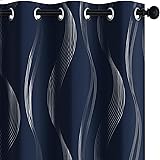
Deconovo Curtains for Living Room, Pattern Blackout Curtains 84 Inches Long | Room Darkening, Thermal Insulated, Grommet, Silver Wave Foil Pattern Window Drapes, 2 Panels Set, Navy Blue, 52 x 84 Inch
$29.99 (as of August 30, 2026 00:00 GMT +00:00 – More infoProduct prices and availability are accurate as of the date/time indicated and are subject to change. Any price and availability information displayed on [relevant Amazon Site(s), as applicable] at the time of purchase will apply to the purchase of this product.)
upsimples 11×14 Picture Frame, Wall Decor Photo Frames, Black 1 Pack | 11 x 14 Frame, 8×10 Frame with Mat for Gallery Wall, Family, Baby, Dog, Dorm, Christmas
$6.29 (as of August 30, 2026 00:00 GMT +00:00 – More infoProduct prices and availability are accurate as of the date/time indicated and are subject to change. Any price and availability information displayed on [relevant Amazon Site(s), as applicable] at the time of purchase will apply to the purchase of this product.)


Leave a Reply