
Owala SmoothSip Slider Insulated Stainless Steel Coffee Tumbler, Reusable Iced Coffee Cup, Hot Coffee Travel Mug, BPA Free 12 oz, Vanilla Bean
(as of October 26, 2026 11:51 GMT +00:00 – More infoProduct prices and availability are accurate as of the date/time indicated and are subject to change. Any price and availability information displayed on [relevant Amazon Site(s), as applicable] at the time of purchase will apply to the purchase of this product.)
Ultrasonic Pest Rodent Repeller, Mouse Squirrel Ant Roach Spider Repellent | Plug-in Pest Control Alternative to Traps and Poison for Home, Office, Garage, Barn and Warehouse, Black 1 Pack
AUD 56.85 (as of October 26, 2026 11:51 GMT +00:00 – More infoProduct prices and availability are accurate as of the date/time indicated and are subject to change. Any price and availability information displayed on [relevant Amazon Site(s), as applicable] at the time of purchase will apply to the purchase of this product.)
Amazon Basics Basket Coffee Filters for 8-12 Cup Coffee Makers, White, 200 Count, Packaging May Vary
AUD 3.48 (as of October 26, 2026 11:51 GMT +00:00 – More infoProduct prices and availability are accurate as of the date/time indicated and are subject to change. Any price and availability information displayed on [relevant Amazon Site(s), as applicable] at the time of purchase will apply to the purchase of this product.)
Cervical Neck Pillow for Pain Relief, Cooling Memory Foam(DarkGrey & White) | Ergonomic Hollow-Core with 15° sleeping Angle | 6-Zone Support | Dual-Height for All Sleepers | Cooling Cover
(as of October 26, 2026 11:51 GMT +00:00 – More infoProduct prices and availability are accurate as of the date/time indicated and are subject to change. Any price and availability information displayed on [relevant Amazon Site(s), as applicable] at the time of purchase will apply to the purchase of this product.)
HydroJug Traveler 32oz, Insulated Water Bottle with Handle, French Vanilla | Triple wall insulated, flip straw lid, leak-resistant, stainless steel, cup holder friendly, BPA-free, dishwasher safe
AUD 56.85 (as of October 26, 2026 11:51 GMT +00:00 – More infoProduct prices and availability are accurate as of the date/time indicated and are subject to change. Any price and availability information displayed on [relevant Amazon Site(s), as applicable] at the time of purchase will apply to the purchase of this product.)Just when you think your vacation home is secure with traditional locks and alarms, automated lighting systems offer an extra layer of protection that makes a significant difference. Your empty property becomes a deterrent to potential intruders by mimicking occupancy through smart lighting schedules. With today’s advanced technology, you can control, monitor, and adjust your home’s lighting patterns from anywhere in the world using your smartphone. These intelligent systems not only enhance your property’s security but also help you save on energy costs while maintaining a lived-in appearance during your absence.
Key Takeaways:
- Random lighting patterns create a more realistic lived-in appearance compared to fixed timers, deterring potential intruders
- Integration with motion sensors and smart home hubs enables dynamic responses to environmental changes and suspicious activities
- Remote control capabilities allow homeowners to adjust lighting schedules and monitor their property from anywhere via smartphone apps
- Using energy-efficient LED bulbs in automated systems reduces long-term operating costs while maintaining effective security
- Combining indoor and outdoor lighting automation creates a comprehensive security perimeter for maximum property protection
Fundamentals of Vacation Home Lighting Automation
To protect your vacation home effectively, automated lighting systems serve as your first line of defense against potential break-ins. These systems combine smart technology with strategic illumination to create an impression of occupancy, deterring intruders and maintaining your property’s security when you’re away.
Core System Components
With modern lighting automation, you’ll need several key components: smart bulbs or switches, a central hub or controller, motion sensors, and a reliable internet connection. Your system’s effectiveness depends on how these components work together to create realistic lighting patterns throughout your property.
Basic Operating Principles
Beside traditional timers, your automated lighting system operates through sophisticated algorithms that learn and replicate your typical usage patterns. You can program different scenarios, adjust brightness levels, and control various zones independently through your smartphone.
Even when you’re thousands of miles away, your lighting automation system maintains natural lighting patterns by varying illumination times and intensity. You can customize schedules based on sunset and sunrise times, creating random variations that make your home appear naturally occupied.
Installation Requirements
With proper planning, you can install most automated lighting components yourself. Your home needs stable Wi-Fi coverage, compatible light fixtures, and proper electrical wiring to support smart devices. Basic technical knowledge will help you set up the system effectively.
Due to variations in home layouts and existing electrical systems, you might need to consider specific requirements for your property. Your installation process should start with a thorough assessment of your current wiring, Wi-Fi coverage areas, and optimal sensor placement locations to ensure maximum system effectiveness.
Smart Technology Integration
Any modern automated lighting system requires seamless integration with your existing smart home infrastructure. You’ll find that connecting your lighting controls with other security features like cameras, motion sensors, and alarm systems creates a comprehensive protection network for your vacation property. Your integrated system allows for coordinated responses to potential security threats while maintaining energy efficiency.
Control Mechanisms
Before selecting your automated lighting system, you’ll need to choose between various control options available in today’s market. Your choices include smartphone apps, voice commands, programmable timers, and motion-activated controls. You can customize these mechanisms to match your specific security needs and preferences, ensuring your vacation home stays protected according to your desired schedule.
Network Requirements
About 90% of smart lighting systems require a stable internet connection to function optimally. Your home network needs to support both WiFi and cellular backup systems to ensure continuous operation of your automated lighting setup. You’ll want to verify your internet service provider offers sufficient bandwidth for real-time monitoring and control.
Consequently, you’ll need to consider installing a dedicated network for your security systems. Your setup should include a backup power source, reliable router placement, and multiple access points throughout the property. This ensures your automated lighting system maintains connectivity even during potential network disruptions.
Remote Access Systems
Integration of remote access capabilities allows you to control your vacation home’s lighting from anywhere in the world. Your smartphone becomes a powerful tool for managing schedules, adjusting settings, and responding to alerts. Through secure cloud connections, you can maintain complete control over your property’s lighting system.
Also, your remote access system should include multi-factor authentication and encrypted connections to protect against unauthorized access. You can set up multiple user accounts with different permission levels, allowing trusted family members or property managers to help monitor and control your vacation home’s lighting system when needed.
Security-First Design Elements
All effective automated lighting systems prioritize your security needs through strategic implementation of smart technology. Your vacation home’s lighting automation should incorporate multiple layers of protection, from basic motion detection to sophisticated AI-powered analysis. When designing your system, you’ll need to consider both interior and exterior coverage, ensuring no vulnerable areas remain unprotected.
Motion Detection Implementation
Across your property, strategically placed motion sensors can trigger immediate lighting responses to unexpected movement. You can customize sensitivity levels and activation zones to minimize false alarms while maintaining comprehensive coverage. Your system can differentiate between pets and potential intruders, automatically illuminating specific areas and sending notifications to your mobile device.
Perimeter Protection Strategies
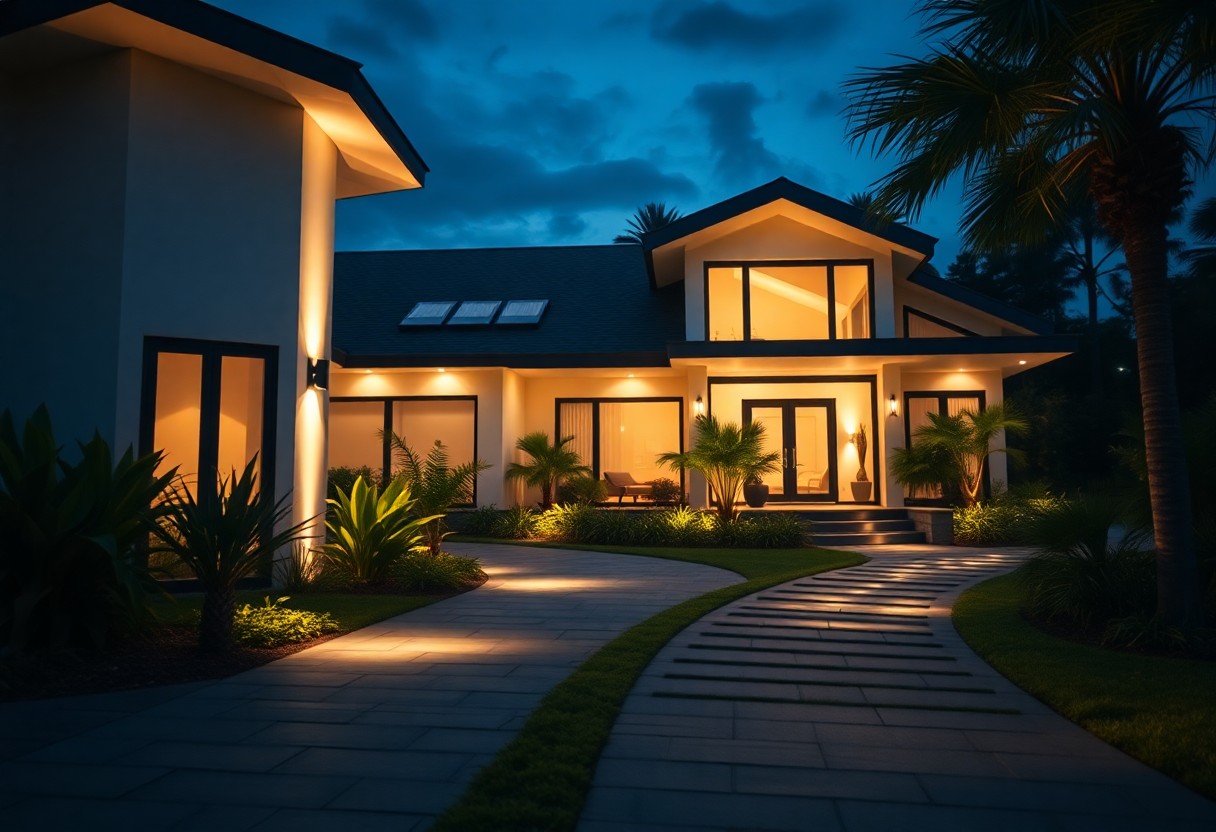
Elements of perimeter lighting should include pathway illumination, boundary markers, and focused spotlights at entry points. Your automated system can create virtual security zones, with lights responding in sequence to movement patterns around your property’s perimeter.
Also, you can enhance your perimeter protection by integrating dusk-to-dawn scheduling with dynamic light intensity adjustments. Your system can simulate occupancy through varied lighting patterns, while motion-triggered flood lights provide immediate deterrence. Smart integration with your security cameras ensures well-lit surveillance zones for clear video capture.
Emergency Response Features
Emergency lighting protocols in your smart system activate instantly during security breaches or safety incidents. Your automated setup can trigger full property illumination, strobe effects to disorient intruders, and guide lights to mark emergency exits.
Understanding your emergency response features allows you to maximize their effectiveness. Your system can be programmed to coordinate with local emergency services, automatically brightening specific areas to guide first responders. You can customize emergency lighting sequences based on different scenarios, ensuring appropriate responses to various situations.
Programming and Scheduling
To maximize your home’s security through automated lighting, you need to establish a comprehensive programming schedule. Your system should mirror your regular living patterns, creating a convincing illusion of occupancy. By setting up different zones and timing sequences, you can ensure your lights turn on and off at natural intervals throughout the day and night.
Pattern Creation
Beside basic scheduling, you’ll want to incorporate randomization features into your lighting patterns. You can program slight variations in timing to prevent predictable sequences that might tip off potential intruders. Your system can replicate natural movement patterns between rooms, simulating evening routines or morning activities.
Seasonal Adjustments
After setting up your base programming, you’ll need to adjust your lighting schedules to match seasonal changes in daylight hours. Your automated system should account for earlier sunsets in winter and later ones in summer, maintaining a natural appearance year-round.
But seasonal adjustments go beyond just timing changes. You should consider how your daily routines shift with the seasons – like spending more time outdoors in summer evenings or staying indoors during winter nights. Your lighting system can be programmed to reflect these seasonal lifestyle changes, making your home’s lighting patterns more authentic and convincing.
Override Protocols
An crucial feature of your automated lighting system should be the ability to override pre-set schedules. You can implement remote access capabilities through your smartphone, allowing you to control your lights manually when plans change unexpectedly.
Consequently, your override protocols should include both manual and automated triggers. You can set up your system to respond to unexpected events like motion detection or integrate with other smart home features. These protocols ensure your lighting system remains flexible while maintaining its security functions, even when your plans deviate from the usual schedule.
Remote Management Capabilities
Now you can control your vacation home’s lighting system from anywhere in the world through advanced remote management features. These capabilities allow you to adjust settings, monitor activities, and respond to situations in real-time, providing both convenience and enhanced security for your property while you’re away.
Mobile Applications
To seamlessly manage your automated lighting system, you’ll have access to user-friendly mobile apps that put control at your fingertips. These applications offer intuitive interfaces where you can create schedules, adjust brightness levels, and toggle lights on or off with just a few taps on your smartphone or tablet.
Real-Time Monitoring
For complete peace of mind, real-time monitoring features let you check the status of every connected light in your vacation home instantly. You can view which lights are active, monitor energy usage, and verify if your automated schedules are running as planned.
Indeed, the sophistication of modern monitoring systems extends beyond basic on/off status checks. You can access detailed reports of lighting patterns, receive instant notifications of any unusual activities, and even integrate with smart cameras to verify the security status of your property visually.
Alert Systems
After setting up your preferences, the alert system becomes your vigilant digital guardian. You’ll receive immediate notifications about unexpected light activations, power outages, or deviations from your preset schedules, allowing you to take swift action when needed.
RealTime alerts can be customized to match your security needs. You can set different notification levels for various scenarios, choose between email, text, or push notifications, and even designate multiple contact persons to receive alerts when you’re unavailable.
Energy Efficiency Considerations
Despite the enhanced security benefits, your automated lighting system’s energy efficiency plays a vital role in both environmental impact and operational costs. You’ll find that modern smart lighting solutions offer numerous ways to optimize power usage while maintaining effective security measures. By implementing the right combination of technologies and settings, you can achieve both superior protection and energy conservation.
Power Consumption Analysis
Analysis of your automated lighting system’s power consumption will help you identify peak usage periods and optimization opportunities. You can track your energy usage patterns through smart home apps and adjust settings accordingly. This data-driven approach enables you to fine-tune your system’s performance while keeping energy consumption in check.
Cost-Saving Measures
At the core of your automated lighting system’s efficiency lies strategic implementation of cost-saving features. You can reduce expenses by utilizing motion sensors, timers, and brightness controls. Your system can automatically dim lights in less-frequented areas and adjust illumination based on natural light levels.
Even with minimal adjustments, you’ll find significant savings potential in your automated lighting system. By programming your lights to operate at 80% brightness instead of full power, you can reduce energy consumption by up to 20% without compromising security. Your smart system’s scheduling capabilities allow you to create custom patterns that align with your vacation property’s actual usage needs.
Green Technology Integration
Before upgrading your lighting system, consider incorporating energy-efficient LED bulbs and solar-powered components. You can enhance your system’s sustainability by integrating renewable energy sources and smart power management features. These green technologies not only reduce your carbon footprint but also provide long-term cost benefits.
In addition to basic green technologies, you can explore advanced options like daylight harvesting sensors and adaptive lighting controls. Your system can automatically adjust to seasonal changes in natural light, optimizing energy usage throughout the year. By connecting your lighting system to a home energy management platform, you’ll gain greater control over your property’s environmental impact while maintaining robust security features.
Weather-Responsive Features
Keep your vacation home secure and energy-efficient with smart lighting systems that adapt to weather conditions. These automated features respond to environmental changes, creating a more realistic occupied appearance while maximizing energy savings and protection during various weather events.
Storm Detection
Along with your home security system, integrated storm detection capabilities allow your lighting to automatically adjust during severe weather. When storms approach, your system can brighten indoor lights and activate specific exterior fixtures to enhance visibility and security during power outages.
Temperature Adaptation
Basic Temperature Response Actions
| High Temperature | Dims indoor lights to reduce heat generation |
| Low Temperature | Increases brightness to add warmth |
To enhance your home’s energy efficiency, advanced temperature adaptation features can be customized based on your preferences.
Advanced Temperature Settings
| Morning Hours | Gradual brightness increase with temperature rise |
| Evening Hours | Automated adjustment based on cooling patterns |
Daylight Sensing
Behind every efficient automated lighting system is intelligent daylight sensing technology. Your system monitors natural light levels throughout the day, automatically adjusting indoor and outdoor lighting to maintain optimal illumination while conserving energy.
Considering your home’s specific layout and window placement, daylight sensors can be strategically positioned to create seamless transitions between natural and artificial light. This feature ensures your vacation home maintains appropriate lighting levels from sunrise to sunset, enhancing both security and energy efficiency.
Maintenance and Troubleshooting
Many automated lighting systems require regular attention to maintain optimal performance and security. Your system’s longevity depends on proper maintenance routines, timely troubleshooting, and professional servicing when needed. By following systematic maintenance protocols, you can ensure your vacation home’s lighting automation continues to provide reliable security.
Regular System Checks
The effectiveness of your automated lighting system relies on consistent monitoring. You should perform monthly checks of all components, including motion sensors, timers, and smart bulbs. Your inspection routine should include testing connectivity, verifying schedules, and ensuring all zones are functioning correctly.
Common Issues Resolution
Across the spectrum of automated lighting systems, you’ll encounter several common issues that you can resolve yourself. These typically include connectivity drops, scheduling conflicts, and sensor misalignment. Your troubleshooting toolkit should include basic reset procedures and configuration adjustments.
Also, you’ll find that most technical hiccups stem from simple causes like weak WiFi signals or outdated firmware. Your first step in resolving these issues should be checking your network strength and updating your system’s software. You can prevent many problems by maintaining strong internet connectivity and keeping your app and devices current.
Professional Service Guidelines
Issues beyond basic troubleshooting require professional intervention. You should contact certified technicians when encountering persistent connectivity problems, hardware failures, or complex integration issues. Your system’s warranty may cover certain repairs, so keep your documentation accessible.
In fact, you’ll benefit from establishing a relationship with a reliable service provider in your vacation home’s area. Your maintenance contract should include annual professional inspections, emergency support, and software updates. By partnering with qualified technicians, you can ensure quick resolution of complex technical issues and maintain your system’s optimal performance.
Backup and Redundancy
Unlike basic lighting systems, smart vacation home lighting requires comprehensive backup solutions to maintain security during unexpected events. Your automated lighting system should incorporate multiple layers of protection, ensuring continuous operation and data preservation even when you’re away from your property.
Power Failure Protection
The foundation of your backup system starts with reliable power failure protection. You’ll need an uninterruptible power supply (UPS) connected to your main automation hub and critical lighting circuits. This setup provides immediate power during outages, giving your system time to transition to emergency protocols.
Secondary Systems
One effective approach to reinforcing your vacation home’s security is implementing redundant lighting controls. Your secondary system operates independently from the primary automation, ready to activate if the main system encounters issues.
With your secondary lighting system in place, you gain an additional layer of protection through parallel circuits and backup controllers. These components work seamlessly with your existing automation while maintaining separate power sources and control mechanisms, ensuring your property remains well-lit and secure even during system malfunctions.
Data Backup Protocols
By implementing robust data backup protocols, you protect your lighting system’s settings, schedules, and security configurations. Your system should automatically create regular backups of all programming and user preferences, storing them both locally and in secure cloud storage.
Indeed, your data backup strategy should extend beyond simple storage. You’ll want to maintain multiple backup copies across different locations, with automatic versioning to track changes. This approach allows you to quickly restore your system to any previous configuration, ensuring minimal disruption to your home’s security lighting patterns.
Privacy and Security Measures
For your automated lighting system’s security, you’ll need to implement multiple layers of protection. Your smart vacation home requires robust privacy measures to prevent unauthorized access and data breaches. By integrating comprehensive security protocols, you can ensure your lighting automation system remains protected while maintaining convenient remote control capabilities.
Data Protection
After setting up your automated lighting system, you’ll want to safeguard all collected data. Your system stores information about your daily routines, occupancy patterns, and preferred settings. You can protect this sensitive data through regular backups, secure cloud storage, and implementing strict data retention policies that align with current privacy regulations.
Access Control
By implementing a multi-factor authentication system, you can maintain strict control over who accesses your automated lighting controls. Your system should include user-specific permissions, allowing you to grant different levels of access to family members, guests, or property managers.
Indeed, you can enhance your access control system by setting up temporary access codes for short-term visitors or maintenance personnel. Your system logs will track all interactions, allowing you to monitor who accesses your lighting controls and when. This detailed activity tracking helps you maintain oversight of your property’s security even when you’re away.
Encryption Standards
Data encryption serves as your primary defense against unauthorized access to your lighting system’s communications. Your automated lighting setup should utilize industry-standard encryption protocols to protect all data transmission between your devices, control hub, and mobile applications.
Also, you can strengthen your system’s security by regularly updating encryption keys and certificates. Your lighting automation system should support the latest encryption standards, including AES-256 for data at rest and TLS 1.3 for data in transit. These protocols ensure your lighting control commands and system data remain protected from potential cyber threats.
Integration with Other Security Systems
Once again, your automated lighting system serves as a cornerstone of your comprehensive home security setup. By integrating your smart lighting with other security components, you create a unified defense system that responds intelligently to potential threats. This synchronization allows for coordinated responses across multiple security layers, enhancing your home’s protection while you’re away.
Camera Coordination
Security cameras work hand in hand with your automated lighting system to provide enhanced surveillance. When motion sensors trigger your lights, your cameras can automatically adjust their settings for optimal recording quality. This coordination ensures you capture clear footage in any lighting condition, giving you better visual evidence of any suspicious activity.
Alarm System Sync
By connecting your automated lighting system with your home’s alarm system, you create a powerful deterrent against intruders. When your alarm triggers, your lights can automatically activate in specific patterns, drawing attention to your property and potentially scaring off unwanted visitors.
Integration between your lighting and alarm systems allows for sophisticated response scenarios. You can program your lights to flash in emergency situations, illuminate escape routes, or create the impression of an active household during alarm events. This synchronized response adds another layer of security to your vacation home.
Emergency Services Connection
To enhance your home’s security further, your automated lighting system can be connected to emergency services protocols. When an alarm triggers, your lighting system can automatically illuminate your house numbers and create clear paths for first responders, reducing response times and improving accessibility.
Coordination with emergency services involves programming your lighting system to respond to different types of emergencies. You can set up specific lighting patterns for fire, break-ins, or medical emergencies, helping first responders quickly identify the nature of the emergency and locate your property more efficiently.
Cost Analysis
Not all automated lighting systems are created equal in terms of cost-effectiveness. Your choice of system will significantly impact both initial expenses and long-term operating costs. Understanding these financial aspects helps you make an informed decision that aligns with your budget and security needs.
Initial Investment
By planning your automated lighting system carefully, you can expect to invest between $500 to $2,500 for a comprehensive setup. Your costs will include smart bulbs, motion sensors, hub controllers, and professional installation if required. The price varies based on your home’s size and the sophistication of your chosen system.
Operating Expenses
With smart LED bulbs and efficient programming, your monthly operating costs can be surprisingly low. You can expect to spend $10-30 per month on electricity for a typical vacation home setup, plus minimal costs for system maintenance and potential cloud service subscriptions.
Hence, your operating expenses can be further optimized through schedule customization and motion-sensor integration. By programming your lights to operate only when needed and using energy-efficient bulbs, you can reduce your monthly costs by up to 40% compared to traditional lighting systems.
Return on Investment
About 60% of vacation homeowners report recovering their initial investment within two years through reduced energy bills, lower insurance premiums, and prevented break-ins. Your savings will vary based on your property’s location and system usage patterns.
Investment benefits extend beyond direct financial returns. You’ll gain peace of mind, potentially increased property value, and reduced risk of vandalism or theft. Your insurance company might offer discounts of up to 20% for homes equipped with automated security lighting systems, further improving your ROI.
Future-Proofing Considerations
After implementing your automated lighting system, staying ahead of technological advancements ensures your vacation property remains competitive and secure. As the vacation rental industry evolves, smart home integration becomes increasingly important. Learn more about enhancing your property’s appeal through 10 Ways to Use Smart Home Technology for Vacation Rentals to maximize your investment’s potential.
Upgrade Paths
Behind every successful automated lighting system lies a clear upgrade strategy. You’ll want to choose systems that offer modular expansion capabilities, allowing you to add new features and components as they become available. This approach helps you maintain cutting-edge security while managing costs effectively.
Emerging Technologies
On the horizon, AI-powered lighting systems and advanced motion prediction algorithms are reshaping vacation home security. You can expect to see integration with voice assistants, behavioral learning capabilities, and enhanced remote monitoring features becoming standard in automated lighting solutions.
This evolution in lighting technology means your system can adapt to guest patterns, weather conditions, and seasonal changes automatically. You’ll benefit from predictive maintenance alerts, energy optimization, and enhanced security protocols that leverage machine learning to distinguish between normal and suspicious activities.
Compatibility Planning
Compatibility with existing and future smart home ecosystems should guide your lighting automation choices. You’ll want to select systems that support universal protocols like Zigbee, Z-Wave, or Matter, ensuring your investment remains valuable as technology evolves.
Plus, considering cross-platform integration capabilities helps you create a seamless experience for both property managers and guests. Your system should work harmoniously with popular smart home platforms, security systems, and property management software, making it easier to maintain and upgrade your setup as needed.
To wrap up
Upon reflecting, your investment in automated lighting systems offers a robust shield for your vacation home when you’re away. By programming realistic lighting patterns, integrating motion sensors, and controlling your system remotely, you’ve created a powerful deterrent against potential intruders. Your smart lighting setup not only mimics occupancy but also provides you with real-time alerts and energy efficiency benefits. As you continue to enhance your vacation home security, these automated solutions will remain an necessary component of your comprehensive protection strategy.
FAQ
Q: How does an automated lighting system enhance my vacation home security?
A: Automated lighting systems create an illusion of occupancy by intelligently varying light patterns throughout your home. The system turns different lights on and off at programmed intervals, mimicking natural human behavior. This deters potential intruders who typically monitor houses for signs of vacancy before attempting break-ins.
Q: Can I control my vacation home’s automated lighting system remotely?
A: Yes, modern automated lighting systems connect to your smartphone through a dedicated app, allowing you to control lights from anywhere with internet access. You can adjust schedules, turn specific lights on/off instantly, and receive notifications about system activity. Some systems also integrate with home security cameras for comprehensive monitoring.
Q: What happens if there’s a power outage at my vacation home?
A: Most advanced automated lighting systems include backup batteries and automatically reconnect to your home’s network when power returns. Many systems also send immediate notifications to your phone during power disruptions. For additional security, consider installing a backup generator to maintain system functionality during extended outages.
Q: How difficult is it to install an automated lighting system in my vacation home?
A: Installation complexity varies based on your chosen system. Basic plug-in smart bulbs and switches can be installed DIY in minutes. More comprehensive hardwired systems typically require professional installation by a licensed electrician. Many manufacturers offer installation services and can complete the setup within 1-2 days.
Q: What features should I look for in a vacation home automated lighting system?
A: Essential features include random scheduling capabilities, remote control via smartphone, motion sensor integration, and compatibility with other smart home devices. Look for systems offering automatic sunset/sunrise adjustment, energy usage reports, and multiple user access with customizable permissions. Weather-resistant components are also important for coastal or mountain properties.
Author


Ophanie Grey Bathroom Rugs 30×20, Soft Chenille Bath Mat, Non Slip Absorbent Quick Dry Light Gray Mats, Machine Washable Thick Small Area Rug Sets,Grip Bathmat for Shower,Toilet,Sink and Indoor Floor
(as of October 26, 2026 11:51 GMT +00:00 – More infoProduct prices and availability are accurate as of the date/time indicated and are subject to change. Any price and availability information displayed on [relevant Amazon Site(s), as applicable] at the time of purchase will apply to the purchase of this product.)
BEDLORE Waterproof Mattress Protector, Queen Size Mattress Pad Noiseless | Deep Pockets Fit 6″-18″ Mattresses, Soft Breathable Dirt-proof Bed Mattress Cover Washable for Home, Bedroom, Hotel (White)
(as of October 26, 2026 11:51 GMT +00:00 – More infoProduct prices and availability are accurate as of the date/time indicated and are subject to change. Any price and availability information displayed on [relevant Amazon Site(s), as applicable] at the time of purchase will apply to the purchase of this product.)
Leakproof Silicone Baking Mat with Snap Lock Edges Nonstick Oven Liners | Reusable Heat Resistant Fiber Cooking Sheet, Corners Snap into Leak Proof Roasting Tray, Extra Thick Transformable Snap‑up
(as of October 26, 2026 11:51 GMT +00:00 – More infoProduct prices and availability are accurate as of the date/time indicated and are subject to change. Any price and availability information displayed on [relevant Amazon Site(s), as applicable] at the time of purchase will apply to the purchase of this product.)
FAOGO Cordless Handheld Vacuum Cleaner, 2-in-1 Vacuum & Blower, 36000Pa Suction Brushless Motor, Car Vacuum with LED Light, Lightweight, Covers for Car, Home, Office and Outdoor Use, Carbon Black
AUD 56.83 (as of October 26, 2026 11:51 GMT +00:00 – More infoProduct prices and availability are accurate as of the date/time indicated and are subject to change. Any price and availability information displayed on [relevant Amazon Site(s), as applicable] at the time of purchase will apply to the purchase of this product.)

Leave a Reply