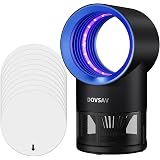
Fruit Fly Traps for Indoors, Blue Gnat Trap Indoor with Suction & Timer | Uv Light Lures Fruit Flies/Gnats, Timer 6/12hrs, Plug in Fly Trap with Suction, Kid & Pet Applicable, Low Noise, 10 refills
$35.99 (as of August 30, 2026 00:00 GMT +00:00 – More infoProduct prices and availability are accurate as of the date/time indicated and are subject to change. Any price and availability information displayed on [relevant Amazon Site(s), as applicable] at the time of purchase will apply to the purchase of this product.)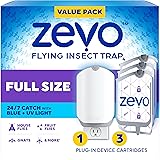
Zevo Flying Insect Trap for Fruit Flies & Gnats, 1 Plug-in Base & 3 Refills | Catches Fruit Flies & Gnats Near Fruit Bowls & Trash Bins, Spray-Free, Odor-Free, Blue & UV Light Trap, Safe for Kids & Pets*
$25.96 (as of August 30, 2026 00:00 GMT +00:00 – More infoProduct prices and availability are accurate as of the date/time indicated and are subject to change. Any price and availability information displayed on [relevant Amazon Site(s), as applicable] at the time of purchase will apply to the purchase of this product.)
KITCHENAID Ribbed Soft Silicone Oven Mitt 2-Pack Set, 7.5″x13″, Milkshake Tan
$13.72 (as of August 30, 2026 00:00 GMT +00:00 – More infoProduct prices and availability are accurate as of the date/time indicated and are subject to change. Any price and availability information displayed on [relevant Amazon Site(s), as applicable] at the time of purchase will apply to the purchase of this product.)
Glitter Fall Window Clings Autumn Thanksgiving Window Stickers Decals Decor | 6 Sheets Window Decals with Sparkling Powder, Happy Fall Decorations for Home Office School Classroom Kids Room Indoor Party
$6.98 (as of August 30, 2026 00:00 GMT +00:00 – More infoProduct prices and availability are accurate as of the date/time indicated and are subject to change. Any price and availability information displayed on [relevant Amazon Site(s), as applicable] at the time of purchase will apply to the purchase of this product.)
CGK Linens Dorm Room Bed Skirt Twin XL – Dorm Room Essentials – 32″ White | Extra Long Dust Ruffled College Bedskirt with Split Corners, Easy Fit Elastic Strap, Adjustable, Fade & Wrinkle Free
$29.99 (as of August 30, 2026 00:00 GMT +00:00 – More infoProduct prices and availability are accurate as of the date/time indicated and are subject to change. Any price and availability information displayed on [relevant Amazon Site(s), as applicable] at the time of purchase will apply to the purchase of this product.)Over the past decade, you should prioritize smart vacation home security systems that deliver reliable remote monitoring through live high-definition video, instant motion and entry alerts, two-way audio, encrypted cloud storage, and seamless mobile app controls with customizable geofencing and user permissions; integrating battery-backed sensors, Z-Wave or Zigbee compatibility, and optional professional monitoring gives you layered visibility into your property and rapid response whether you’re across town or abroad.
Key Takeaways:
- High-quality smart cameras and doorbells with cloud storage, motion/person detection, two-way audio, and live remote viewing provide the strongest remote surveillance capabilities.
- Smart locks and access management (temporary codes, activity logs, remote lock/unlock) combined with door/window sensors give secure, auditable entry control from anywhere.
- Reliable connectivity via dual-band Wi‑Fi, optional cellular backup, and local battery/power redundancy ensures continuous remote monitoring and alerts.
- Integrated platforms and standards (Matter, Z-Wave, Zigbee) plus a single app/dashboard simplify monitoring, automations, and third-party integrations like professional monitoring or local emergency dispatch.
- Environmental sensors (water, smoke, CO) with instant push alerts, rule-based automations, and video verification reduce false alarms and enable faster remote responses to real threats.
Understanding Smart Vacation Home Security
Importance of Remote Monitoring
You can monitor your property 24/7 with live video, motion alerts and geofencing that deliver push notifications within seconds; professional monitoring plans commonly run $15-30/month and can dispatch local responders if an alarm verifies. Using verified video or two-step alerts reduces unnecessary calls and helps maintain guest satisfaction and insurance compliance, while remote check-ins let you confirm occupant identity before granting access.
Types of Security Features
You should deploy a mix of 4K or 1080p cameras, door/window contact sensors, smart locks, motion-activated lighting and environmental detectors (smoke/CO/flood) so you get both perimeter visibility and internal hazard alerts; choose devices supporting AES-256 encryption and mesh protocols like Z-Wave or Zigbee for reliable, low-latency control across larger properties.
- Video cameras: live view, two-way audio, and tamper alerts.
- Entry sensors: instant contact notifications and activity logs for each door.
- Smart locks: temporary PINs, auto-lock schedules and remote revoke features.
- Environmental sensors: smoke, CO and water detection with local sirens.
- After you chain these layers, automated workflows and verification lower false alarms and simplify guest access management.
| Video Cameras | 4K/1080p, night vision, cloud/local recording, motion zones |
| Door/Window Sensors | Realtime contact alerts, tamper detection, 1-2 year battery life |
| Smart Locks | PINs, temporary codes for cleaners/guests, audit trail, battery backup |
| Motion-Activated Lights | LED fixtures, configurable sensitivity, integration with cameras |
| Environmental Sensors | Smoke/CO/flood with 85+dB alarms and instant app notifications |
You should also size network and storage to match camera quality: many providers offer 30-day cloud retention ($5-30/mo per camera), 1080p typically needs ~1-2 GB/hour while 4K can require 3-5 GB/hour of upload, and local NVRs or SD backups cut subscription costs; ensure you document retention policies for guests and keep firmware updated monthly for security.
- Local vs cloud recording: local NVR or SD reduces recurring fees.
- Monitoring tiers: self-monitor, verified video, or full professional dispatch options.
- Integrations: HomeKit, Google, Alexa and IFTTT for automated routines and guest conveniences.
- Connectivity resilience: dual-band Wi‑Fi, wired Ethernet and optional LTE backup for outages.
- After you enable layered monitoring with redundancy, downtime drops and guest trust improves.
| Recording Options | Cloud plans ($5-30/mo) or local NVR/SD for cost control |
| Monitoring Levels | Self-monitor, verified-video alerts, professional dispatch |
| Integration | Works with HomeKit, Google Assistant, Alexa, IFTTT |
| Connectivity | Dual-band Wi‑Fi, Ethernet backbone, LTE cellular backup |
| Power & Backup | AC main with 24-72 hr battery or UPS; solar for remote builds |
Key Remote Monitoring Technologies
You rely on a layered toolkit-cameras, contact and motion sensors, environmental detectors, and resilient networking-to monitor your vacation home from anywhere. Cameras often provide 1080p-4K video with H.265 compression and night vision to 30-50 ft, while sensors like contact, PIR, glass-break, and water/CO detectors typically last 2-5 years on battery. Cloud retention usually ranges 7-30 days, and AES-256 encryption plus cellular failover ensure access and evidence when you need it.
Cameras and Video Surveillance
Choose cameras offering 1080p or 4K resolution, 15-30 fps, IR night vision, two-way audio, and optional PTZ for full coverage. Smart analytics-person/vehicle detection and line-crossing rules-can cut false alerts by up to 80-90% and trigger linked actions like spotlighting or recording. Expect continuous 24/7 recording to use 50-150 GB/month per camera depending on settings, so plan for cloud tiers or local NVR storage and cellular backup for outages.
Smart Sensors and Alarms
Door/window contacts, PIR motion sensors, glass-break detectors, water and CO detectors, and smart locks form the backbone of perimeter and interior sensing. Many run on Zigbee, Z-Wave, Thread or Wi‑Fi with typical alert latency under 2 seconds and battery lives of 2-5 years. Integration with a hub or professional monitoring allows automated scenes, geofencing, and immediate push or SMS alerts to your phone.
Placement and logic matter: mount door/window contacts on every exterior opening and position motion sensors to cover 30-40 ft with a 90° arc, avoiding HVAC vents that cause false trips. You can pair motion sensors with cameras so a verified motion event records a 10-30 second clip and reduces nuisance alerts via dual-sensor rules. Additionally, enable tamper detection and scheduled arming, track battery health through the app, and weigh self-monitoring versus paid professional monitoring plans ($15-50/month) based on response requirements.
Integrating Smart Home Technology
When you integrate smart tech into a vacation home, prioritize hubs and protocols: Z-Wave (up to 232 nodes), Zigbee (65,535 addresses), Wi‑Fi (2.4 GHz for many devices) and cloud-to-cloud APIs. Use Home Assistant or Samsung SmartThings to centralize cameras, locks, and thermostats, route camera streams to local NAS for redundancy, and configure VPN or secure remote access so you can monitor live feeds and alarms without exposing devices to the public internet.
Compatibility with Existing Systems
Audit your legacy alarm panel and locks first; many panels accept relay/dry-contact modules or adapters like Envisalink for DSC/Honeywell to enable IP reporting. Check hub support for required protocols, firmware update policies, and vendor APIs. If you rely on a PMS, confirm cloud integrations (e.g., Guesty, Hostaway) or use middleware like IFTTT/Node-RED to bridge mismatched systems and preserve device counts, network channels, and encryption standards.
User-Friendly Interfaces
You should expect polished mobile apps, web dashboards, and voice control that reduce onsite management. Look for features like geofencing, push notifications, multi-user roles, temporary access codes, and one-touch camera clips. Many consumer apps let you provision devices in 5-15 minutes, assign time-limited guest codes, and view live video grids with event timelines, making it faster to respond to incidents and manage guest access remotely.
For deeper control, choose interfaces offering customizable dashboards (Home Assistant Lovelace or commercial portals), REST APIs and webhooks for PMS integration, detailed audit logs, and two-factor authentication. Templates and onboarding wizards speed rollout across multiple properties, while event filtering and timeline search let you triage alerts quickly; role-based permissions ensure cleaners, guests, and contractors get restricted, time-bound access with full activity trails.

Choosing the Right Security Options
Evaluating Your Property’s Needs
Assess your property’s layout, entry points and typical guest turnover: a 2,000 sq ft cabin usually needs 3-4 cameras (driveway, front door, backyard, garage), plus 6-8 door/window sensors for a multi-entry rental. Use outdoor cameras with 30-50 ft night vision and motion zones to cut false alerts, add water sensors near washers/sumps if flooding is possible, and include cellular backup so your system stays online during power outages.
Budget Considerations
Balance equipment and ongoing costs against risk: basic DIY setups run $200-$600 in gear with $0-$10/month cloud plans, while 4K systems or professional installation push $800-$1,500 plus $15-$30/month monitoring. Factor in installation ($0-$500), optional cellular backup ($5-$20/month), and possible insurer discounts that often range 5-20% when you add verified remote monitoring.
Prioritize spending by impact: invest first in a reliable front-entry camera and smart lock to stop most unauthorized entries, then add perimeter cameras and environmental sensors as budget allows. Consider storage and bandwidth-1080p streams typically use 1-4 Mbps per camera vs 4K at ~10-20 Mbps-so if your upload is limited, a 1080p system with 30-day cloud retention or a local NVR ($150-$600) can be the most cost-effective choice for continuous remote monitoring.
Recommended Security Systems
You’ll want a mix of professionally monitored systems (ADT, Vivint) and high-quality DIY options (SimpliSafe, Ring, Arlo) depending on the property. Professional plans give 24/7 monitoring, verified dispatch, and cellular backup, while DIY systems lower upfront cost and offer flexible monthly plans from about $10-30. Prioritize systems with encrypted cloud storage, local backup, and clear guest-privacy settings so you can secure a vacation home without overstepping rental privacy laws.
Top Brands and Products
ADT and Vivint lead for full-service monitoring and integrated smart-home control; ADT often pairs with Honeywell and Yale locks, Vivint emphasizes automation and custom installs. SimpliSafe and Ring provide economical DIY kits with optional monitoring from ~$15/month, while Arlo and Nest (Google) excel at 2K-4K cameras and AI-based person detection. Reolink offers low-cost PoE options for consistent power and remote, high-resolution feeds for larger properties.
Features to Look For
Seek 24/7 professional or verified self-monitoring, cellular failover, battery backup (6-12 month typical for wireless sensors), end-to-end encryption (AES-256), AI person/vehicle detection to cut false positives, geofencing for automated arming, and integration with smart locks/thermostats. Also check cloud retention durations (30-90 days) and whether the system supports local storage or multi-user access with role-based permissions for property managers.
For higher-theft or remote locations, choose cameras with at least 2K resolution, an adjustable activity zone, and two-way audio to deter intruders; pair those with motion-triggered recording to limit bandwidth and storage use. You should verify cellular carrier compatibility for failover, confirm average cloud retention (e.g., 30 days), and require a monitoring plan that includes verified alarm dispatch with remote video verification to reduce false dispatches and speed response times.

Case Studies: Successful Implementations
- 1) Coastal Rental Group (12 properties) – integrated cameras, motion analytics and centralized monitoring: unauthorized entry incidents down 85%, false alarms reduced 70%, average operator response 4 minutes, estimated annual loss avoidance $48,000.
- 2) Single-Owner Mountain Cabin – smart water sensors, automatic shutoff valve and backup LTE: a burst pipe was stopped within 90 seconds, avoided ~$15,000 in damage, system uptime 99.9% over 18 months.
- 3) Boutique Villa Management (25 units) – cloud smart locks with per-stay codes and audit logs: rekeying costs eliminated (~$20,000/year), guest lockout calls down 90%, average remote check-in 30 seconds.
- 4) Multi-State Portfolio (60 listings) – AI video analytics and 24/7 monitoring: package thefts fell 78%, monitoring alerts reached property managers in 2.3 minutes on average, tech payback period 14 months.
Real-World Examples
You can see immediate impact when smart locks, water sensors and AI cameras are combined: one 12-property operator cut unauthorized entries 85% and false alarms 70%, while another single-cabin owner avoided a $15,000 claim by stopping a burst pipe within 90 seconds thanks to an LTE-backed leak sensor and automatic shutoff.
Lessons Learned
You should prioritize water and entry sensors first, set analytics thresholds to limit false positives, and require vendor SLAs for uptime; operators who followed that sequence reduced emergency interventions by more than 60% and cut monitoring costs within the first year.
Further, you’ll benefit from routine monthly sensor tests, encrypted cloud backups, and hybrid connectivity (Wi‑Fi plus cellular) to keep remote monitoring reliable; adjusting sensitivity based on location reduced nuisance alerts by 40% in deployments that tracked those metrics.
To wrap up
With this in mind, you should choose smart vacation home security that combines cloud-connected cameras with two-way audio, motion and door/window sensors, smart locks, and a unified mobile app for real-time alerts and video streaming. Geofencing, scheduled arming, end-to-end encryption, automatic firmware updates, and optional professional monitoring give you reliable remote oversight and rapid response capabilities to protect your property while you’re away.
FAQ
Q: What types of smart security systems offer the best remote monitoring for a vacation home?
A: Professional monitored systems (ADT, Vivint) and advanced DIY systems (SimpliSafe, Ring, Arlo) both offer strong remote monitoring. Choose professional monitoring for 24/7 response and dispatch. Choose advanced DIY if you want lower recurring costs with app-based alerts, live video, cloud recording, and optional professional backup. Prioritize systems that support cellular backup, encrypted communications, and integrations with cameras, locks, sensors, and environmental detectors.
Q: Which camera features matter most for reliable remote monitoring?
A: Key camera features are high resolution (1080p or better), wide field of view, night vision, two-way audio, motion zones and person/vehicle detection (AI), and tamper detection. Storage options should include cloud recording for remote access plus local storage (microSD or NVR) for redundancy. End-to-end encryption and secure user authentication protect footage. Weatherproof, battery-backed or wired outdoor cameras reduce downtime at an unattended property.
Q: What combination of sensors and devices should a smart vacation home include for effective remote monitoring?
A: Recommended combination: exterior cameras (front, back, driveway), video doorbell, smart locks with temporary codes, door/window contact sensors, motion sensors with pet immunity, glass-break sensors, and environmental sensors (smoke, CO, water leak). Add a hub that supports Z-Wave/Zigbee for sensor reliability. Use geofencing and automation to arm/disarm based on owner presence and to trigger camera recording and lights on suspicious activity.
Q: How do smart locks and access controls enhance remote monitoring and guest management?
A: Smart locks provide remote lock/unlock, time-limited access codes, access logs with timestamps, and integration with camera and alarm events. Configure unique codes per guest and automate code activation/deactivation for bookings. Pair locks with video verification (doorbell camera) and notifications for failed attempts. Choose locks with tamper alerts, secure encryption, battery status reporting, and a manual key override for emergencies.
Q: What connectivity, notification, and privacy practices keep remote monitoring reliable and secure for a vacation home?
A: Ensure dual connectivity: primary high-speed Wi‑Fi plus cellular backup or integrated LTE hub to maintain monitoring if internet fails. Use battery or generator backup for critical devices. Configure push notifications, SMS fallback, and email alerts with customizable motion and event thresholds to limit false alarms. Protect accounts with strong passwords and multi-factor authentication, opt for vendors with firmware update policies and encrypted data storage, and prefer vendors offering local backup options to balance privacy and remote accessibility.
Author


Etekcity Food Kitchen Scale, Digital Grams and Ounces, 11lb | Tare function, ideal for baking, weight loss, keto, meal prep, packages, liquids and jewelry, 304 Stainless Steel
$8.86 (as of August 30, 2026 00:00 GMT +00:00 – More infoProduct prices and availability are accurate as of the date/time indicated and are subject to change. Any price and availability information displayed on [relevant Amazon Site(s), as applicable] at the time of purchase will apply to the purchase of this product.)
DANGEAB Fall Pillow Covers Pumpkin Fall Decor 18×18 Set of 2 Beige | Soft Plush Faux Fur,Fall Decorations for Home,Thanksgiving and Autumn Harvest Decor,Porch Sofa Couch Cushion Bed Livingroom
$8.99 (as of August 30, 2026 00:00 GMT +00:00 – More infoProduct prices and availability are accurate as of the date/time indicated and are subject to change. Any price and availability information displayed on [relevant Amazon Site(s), as applicable] at the time of purchase will apply to the purchase of this product.)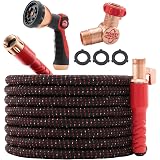
Pocket Hose Ballistic 100 FT Expandable Garden Hose, No-Kink, As Seen on TV | Anti-burst sleeve reinforced with bulletproof fiber, 360° swiveling pocket pivot connector, lightweight compact design
$69.99 (as of August 30, 2026 00:00 GMT +00:00 – More infoProduct prices and availability are accurate as of the date/time indicated and are subject to change. Any price and availability information displayed on [relevant Amazon Site(s), as applicable] at the time of purchase will apply to the purchase of this product.)
Beckham Hotel Collection Bed Pillows Standard/Queen Size Set of 2 | Original Soft Down Alternative Pillow for Sleeping, Soft Support for Back, Stomach or Side Sleepers
$41.97 (as of August 30, 2026 00:00 GMT +00:00 – More infoProduct prices and availability are accurate as of the date/time indicated and are subject to change. Any price and availability information displayed on [relevant Amazon Site(s), as applicable] at the time of purchase will apply to the purchase of this product.)


Leave a Reply